

Reduce Fleet Costs with Telematics
Discover how telematics helps fleet operators reduce costs. We partner with telematics and vehicle safety tech brands to deploy their solutions at scale, and support fleet managers to turn that technology into real‑world fuel, maintenance and insurance savings.



Why Consider Fleet Costs?
Managing a fleet comes with a wide range of costs, including vehicle acquisition, maintenance, insurance, fines and charges, and fuel, which is often one of the largest operating expenses. In the current economic climate, these costs are being pushed up further by inflation and ongoing fuel price volatility.
Without careful monitoring and control, spend can escalate quickly and severely impact margins. Fleet managers need clear visibility of these cost drivers to avoid unnecessary expenditure, maximise efficiency and protect profitability. Not knowing how much money is being lost through inefficient management can be highly damaging, which makes proactive cost control a core element of any fleet management strategy.
Telematics helps fleet managers reduce costs by giving them more detailed insight into what’s happening with their fleet.
How Telematics technology helps reduce fleet operating costs
Reducing fleet-associated costs is one of the benefits for fleets investing in telematics technology, and it plays out in many ways, which our experts will show you here.
Telematics platforms come with a range of features that enable fleets to evaluate how vehicles are used, driver behaviour, and other small but critical elements of their operation.
Fleets are different from one another in many ways. For example, one fleet may operate mostly HGVs, while another may have a few HGVs but a large number of vans. Therefore, one fleet may struggle with an increased number of fines, while another may struggle with vehicle theft or excessive idling. That is why telematics solutions can be configured to suit the business operations and risk profile of each fleet.
Cameras
Vehicle Camera technology enables fleet operators to reduce fleet running costs in many ways. It is very common for fleets to pay extremely high insurance premiums due to a history of crashes or a lack of investment in safety technology.
Investing in cameras for commercial vehicles helps protect fleets when vehicles are involved in accidents. Where the driver is not liable, or where it is a “crash for cash” scam, the fleet and driver can be exonerated with video evidence, helping to reduce insurance premium costs and payouts.
Reverse cameras also increase visibility and reduce blind spots, limiting the risk of low-speed collisions which are common in commercial vehicles. This reduces damage and the need for vehicle repairs or replacements.
In the unfortunate event of an accident, fleets with video telematics technology can remotely download footage. This supports effective First Notification of Loss (FNOL), meaning incidents and claims can be dealt with quickly, reducing downtime and enabling more efficient claims management, all of which lead to reduced costs.
Reduce Theft
Theft is another major threat for fleets, particularly those carrying valuable cargo. Investing in vehicle cameras and CCTV systems can act as a deterrent, reducing the risk of theft and giving fleet operators better visibility of what is happening around their assets.
GPS tracking platforms
As one of the longest-established forms of telematics, there is substantial evidence and many case studies showing how fleet tracking systems can reduce costs.
By tracking vehicles, fleets can see how and when vehicles are being used, cut down on unauthorised vehicle use, take advantage of route optimisation, and improve routing and scheduling. All of these contribute to reducing fuel expenditure, minimising waste, and improving productivity.
Remote automated downloads
For certain commercial vehicles, particularly HGVs and other large vehicles, it is a legal requirement to keep records of drivers’ hours, breaks, and other tachograph data. This responsibility lies with both the driver and the fleet operator.
Without telematics, companies often have to wait for vehicles to return to the depot in order to download tachograph data and readings. This wastes time, increases operational costs, and affects efficiency. It can also leave the operator at risk in the event of an inspection if data is missing or downloaded late.
With remote tachograph downloads, data can be downloaded automatically over the air without needing physical access to the vehicle. This helps operators meet legal download intervals more reliably, reduces administrative overheads, and makes operations more productive.
Fleet safety reduces fleet operating costs
One of the top concerns for fleet operators and transport managers is ensuring drivers return home safely after completing their jobs, making fleet safety an important part of their responsibilities.
If fleet safety is not taken into consideration, costs can easily skyrocket. Accident rates increase, vehicles get damaged, and vehicle downtime rises, all of which eat into profits. Without a strong safety focus, the fleet’s risk profile also increases, leading to higher insurance premiums.
Therefore, investing in fleet safety programmes and implementing robust fleet safety policies not only helps keep drivers and the public safe but also increases profitability and reduces operational costs.
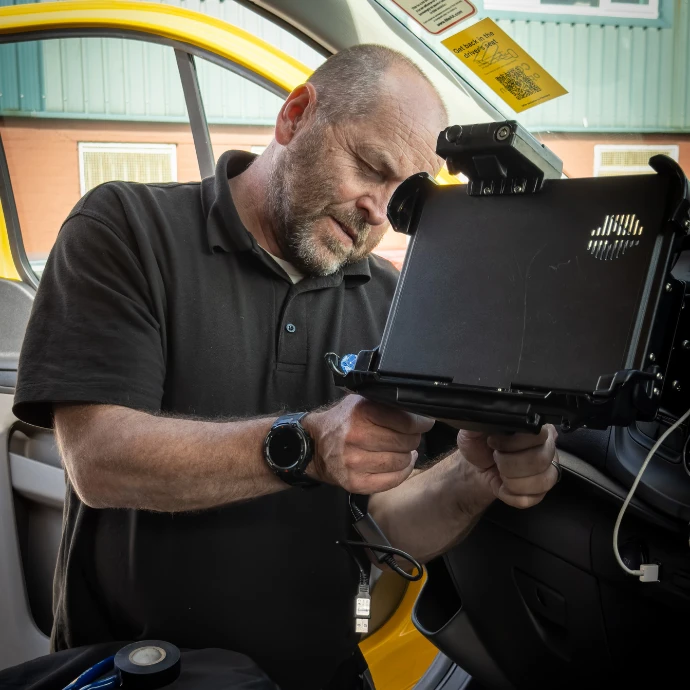
Small measures, such as investing in mounts for job management hardware and mobile phones, allow drivers to operate vehicles safely without having to handle devices while driving. These devices can be securely mounted in vehicles. Without such solutions, drivers may end up using electronic devices while driving, which can lead to fines, penalty points, and an increased risk of accidents.
Reduced risk of accidents
Types of accidents and incidents vary, and some can be extremely costly as well as dangerous. For example, low bridge collisions are a significant issue.
Most vehicles that strike railway bridges are Heavy Goods Vehicles (HGVs) and buses, at a cost of around £13,000 per strike, costing the UK taxpayer approximately £23 million per year, according to Network Rail. When this happens, the driver and fleet operator are liable.
Investing in low bridge detection and warning technology provides drivers with additional assistance by helping them understand the height of their vehicle and check bridge heights in advance, reducing the risk of low bridge strikes.
Reduce the costs of roller brake testing
HGV fleet operators with trailers, as well as rental firms, have legal obligations to ensure braking performance, which typically includes laden roller brake testing at regular intervals throughout the year in addition to the MOT test.
This often results in trailers and trucks being taken off the road for significant periods, potentially totalling several days of lost operational time per year. However, by investing in technology such as electronic braking performance monitoring systems (EBPMS), fleets can continuously monitor brake performance in service and use that evidence to satisfy DVSA expectations for regular brake performance assessments.
In many cases this can substantially reduce the number of separate laden roller brake tests required, often leaving only the MOT-aligned roller brake test each year.
This saves time and significantly reduces the cost of multiple annual tests while still maintaining compliant brake performance monitoring.
Avoid paying non-compliance fines
Another benefit of telematics is reducing fines and penalties. Fleets can often incur significant costs from fines if compliance is not properly managed.
Track your vehicles
For example, gps fleet tracking provides insight into where vehicles operate, allowing operators to determine which vehicles may be exposed to congestion charges, toll roads, or Clean Air Zone (CAZ) and Low Emission Zone (LEZ) requirements, and to plan accordingly.
Investment in technologies such as cameras, sensors, and monitoring systems also helps vehicles comply with regulations and standards such as the Direct Vision Standard (DVS) in London and accreditation schemes like the Fleet Operator Recognition Scheme (FORS). This helps ensure vehicles meet relevant safety and visibility requirements and are not fined, refused entry to sites, or prevented from taking on jobs that require these standards or schemes.
Gamification
Some of the fleet management solutions we have installed in the past have included elements of gamification. This helps lead to a reduction in costs. This can be achieved through the implementation of league tables, point systems, and algorithms to determine scores.
Additionally, the use of such systems can enable your drivers to be evaluated and rewarded based on their scores, thereby boosting morale within the team and promoting a friendly discourse surrounding driving styles. Furthermore, introducing gamification can improve driver retention of safe driving practices, thereby enhancing the overall safety of your operations.
How our nationwide install service saves time and reduces fleet costs
There are many reasons why fleet operators choose to use Nationwide Fleet installations for their telematics projects:

Removing Barriers to Technology Adoption
One of the primary causes of telematics project failures stems from challenges in the installation process. Consequently, many fleet operators are reluctant to adopt technology due to the associated difficulties, possibly stemming from prior experiences.
Engaging a professional installer such as Nationwide Fleet Installations can accelerate the integration of new technology into your fleets, providing assurance and peace of mind. This offers numerous advantages, including project management and coordination of all installations for large fleets, expertise in interpreting technical guides and documentation, proficiency in handling various types of assets and vehicles, and extensive coverage regardless of your vehicles’ locations.
Reduce the need for multiple contractors.
Instead of having multiple installers and contractors for the installation of your cameras, telematics and safety systems, imagine a world where managing multiple invoices, payment systems, and admin teams becomes easy.
When fleets rely on different installers for different pieces of equipment, it can also create problems later on when it comes to replacing, upgrading, or expanding systems. With no continuity between who fitted the equipment previously, different installation methods, wiring approaches, and mounting locations may have been used.
While it may be easy to find someone to install equipment quickly at the time, this lack of consistency can create significant challenges in the future when systems need to be serviced, upgraded, or replaced.

Project Management
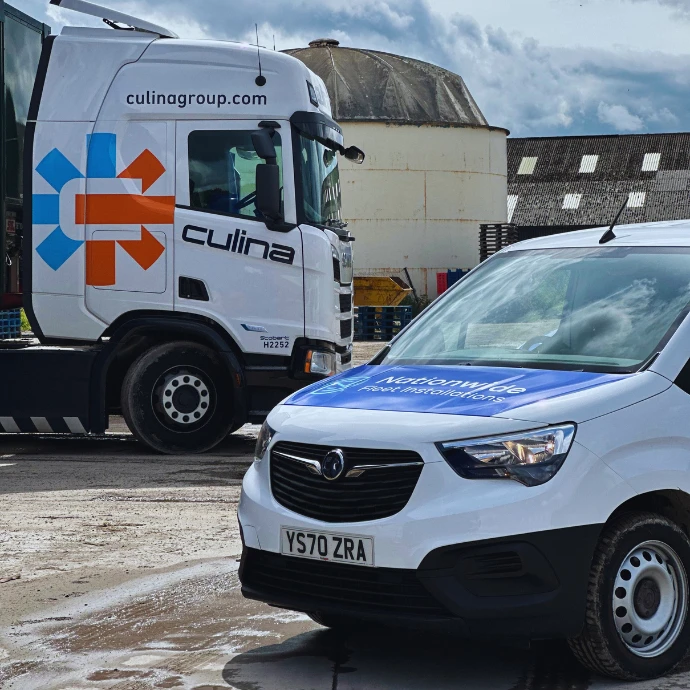
It is crucial to consider not only the installation process itself but also the type and quantity of vehicles involved. These vehicles are likely to be dispersed across various depots throughout the country and operate according to different schedules, with some drivers potentially taking their vehicles home at the end of the day. As a result, coordinating the installation of new telematics providers or upgrading existing technology can pose a significant logistical challenge for many businesses, resulting in projects going overbudget and beyond deadlines.
To alleviate this concern, Nationwide offers a world-class project management service. From our UK head office, our team collaborates with your clients to develop and execute the most efficient rollout plan possible. You will be assigned a dedicated Project Manager who will liaise with you, your client, and other relevant stakeholders to ensure successful project completion. We are committed to making the installation process as smooth and hassle-free as possible for our clients.
We can integrate the following technology into your fleet:
Through the installation of telematics and connected vehicle technologies, we enable the following capabilities that help reduce fleet costs:
- Fleet Compliance and risk: driver hours, DVSA/tachograph solutions
- Driver behaviour monitoring: speeding, harsh events, idling, eco-driving, scorecards and coaching.
- Fleet data and reporting enablement: installed telematics systems that capture operational data used for analytics, dashboards and fleet performance reporting.
- Fuel and CO₂ data enablement: installation of telematics devices that capture fuel usage, idling and vehicle data used for fuel analytics, route efficiency insights and EV suitability assessments.
- Maintenance and diagnostics: odometer capture, engine hours, fault code (DTC) alerts, predictive maintenance.
- Routing, dispatch and job management: route optimisation, job dispatch, PODs, time-on-site, customer ETA notifications.
- Vehicle tracking and GPS: live location, routing, geofencing, ETA, utilisation.
- Video / camera / AI safety systems: dash cams, multi-cam, AI video telematics, ADAS, driver monitoring.
Frequently Asked Questions
Here are some commonly asked questions
Get In Touch
Expert nationwide installation that helps vehicle technology providers and fleet operators get cost‑saving telematics into vehicles quickly, with minimal downtime. Contact us today for an installation package that is tailor-made for your business.