

DVS Map: Check If Your HGV Route Enters the London DVS Zone
Not sure if your HGV route falls inside the DVS zone? Here’s a quick guide to where the rules apply.
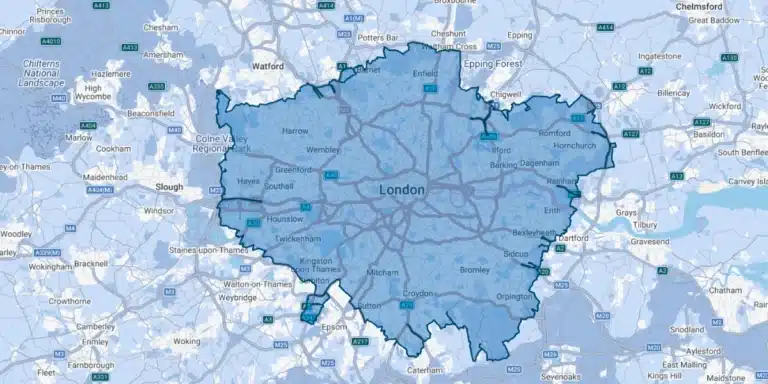
Not sure if your HGV route falls inside the DVS zone? Here’s a quick guide to where the rules apply.
All heavy goods vehicles over 12 tonnes gross vehicle weight (GVW) entering or operating in Greater London (all 32 London boroughs and the City of London) must hold a valid HGV Safety Permit under Transport for London’s Direct Vision Standard (DVS), unless they fall into a specific exempt vehicle category.

Fuel costs can account for up to 40% of your fleet’s total cost of ownership, yet one of the biggest drains on that budget is happening when your vehicles aren’t even moving. Idling quietly burns through fuel, accelerates engine wear, and contributes to emissions that are increasingly under regulatory scrutiny. In this post, we break down the real cost of idling, why it’s so easy to overlook, and how the right telematics setup, professionally installed across your fleet, gives you the data and alerts to tackle it head-on.
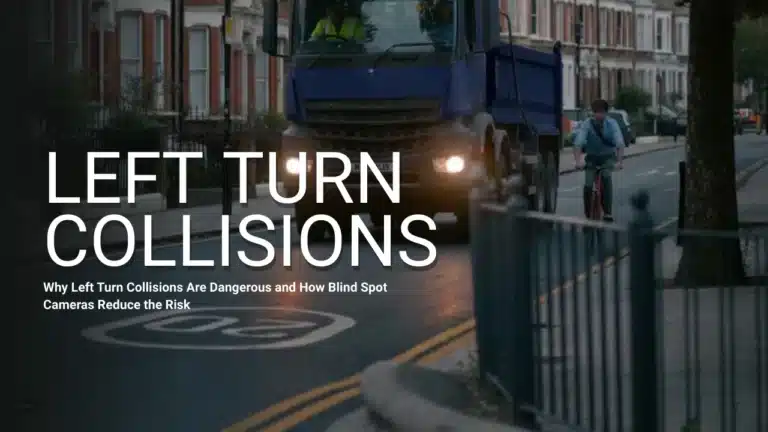
Left turn collisions involving HGVs are among the most devastating incidents on UK roads, with cyclists and pedestrians bearing the worst consequences. Yet the contributing factors, restricted visibility, driver blind spots, and the sheer size of large commercial vehicles, are well understood and, crucially, addressable. This post explores why the danger persists, what the data tells us about the scale of the problem, and how properly installed blind spot camera systems are proving to be one of the most effective tools fleet operators have to protect vulnerable road users.
Investing in fleet dash cams is the right thing to do for fleet operators, but the returns depend heavily on what your cameras can actually see. Blurry footage, poor night vision, and inadequate frame rates can render recordings useless at exactly the moment you need them most: when a dispute arises, an incident occurs, or an insurance claim lands on your desk. In this post, we examine how video quality directly impacts the value you get from your dash cam investment, what specifications to look for, and why professional installation matters as much as the technology itself.

By the time a near-miss makes it into your weekly report, the moment to act has already passed. Real-time camera alerts change that by giving fleet managers instant visibility of risky driving behaviours, mobile phone use, harsh braking, and other incidents as they happen. In this post, we look at how AI-enabled alert systems are transforming fleet safety management, the practical difference between reactive and proactive oversight, and how getting your camera hardware installed correctly from day one determines how well those alerts actually perform.
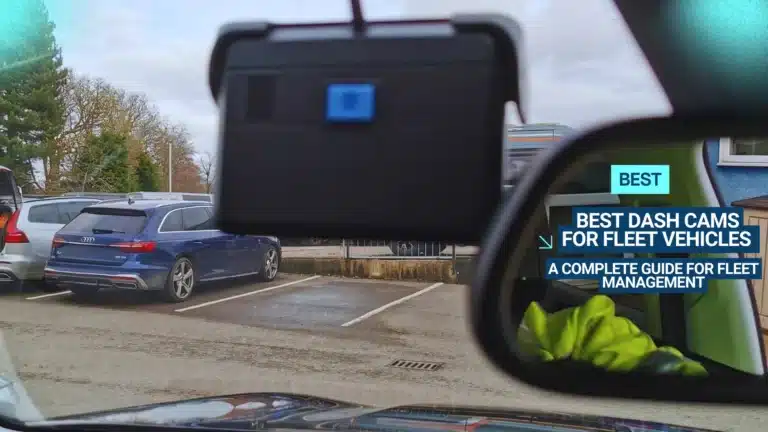
Blog Excerpt: It might be tempting to fit your commercial vehicles with the same dash cams you’d buy for a personal car; they’re cheaper, widely available, and seem to do the same job. But for businesses running a fleet, the differences are significant, and the consequences of getting it wrong are costly. This post breaks down why commercial vehicle dash cams (fleet dash cams, video telematics, forward facing cameras, etc) exist, what sets them apart from consumer models, and why your choice of device and how it’s installed has a direct impact on driver accountability, insurance outcomes, and your bottom line.
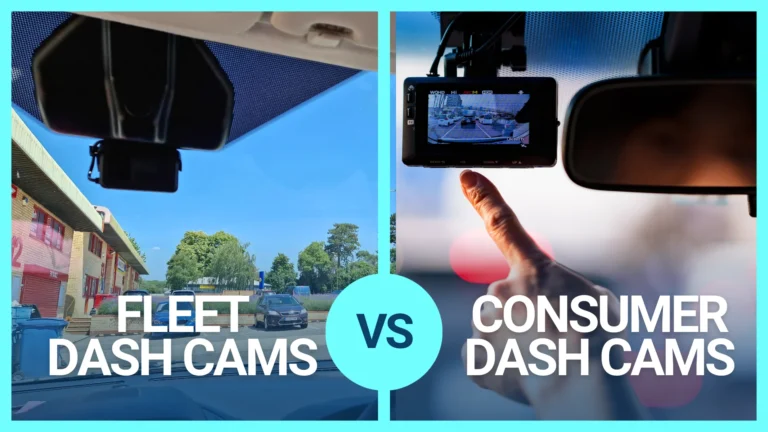
It might be tempting to fit your commercial vehicles with the same dash cams you’d buy for a personal car; they’re cheaper, widely available, and seem to do the same job. But for businesses running a fleet, the differences are significant, and the consequences of getting it wrong are costly. This post breaks down why commercial vehicle dash cams (fleet dash cams, video telematics, forward facing cameras, etc) exist, what sets them apart from consumer models, and why your choice of device and how it’s installed has a direct impact on driver accountability, insurance outcomes, and your bottom line.
This post gives fleet operators a clear, practical overview of the current rules in the UK, the consequences of non-compliance, and how telematics and remote tachograph solutions can take the administrative burden off your hands.
In this post, we look at how EBPMS works, why the new DVSA expectations make now the ideal time to fit it, and how professional installation across your fleet can turn brake compliance into genuine cost savings.