AI Dash Cam vs Standard Fleet Dash Cams: What Fleet Operators Need to Know
AI dash cams for business are quickly replacing standard fleet dash cams in commercial vehicles across the UK. if you manage a fleet, you’ve probably been asked whether the upgrade is worth it. As one of the country’s largest independent telematics installers, we’ve fitted both kinds into thousands of vehicles over the past 30 years, including early AI dashcam trials with our equipment partners. This guide walks you through the real differences: what AI cameras actually do, where they save fleet managers time and money, and what to know before you switch.
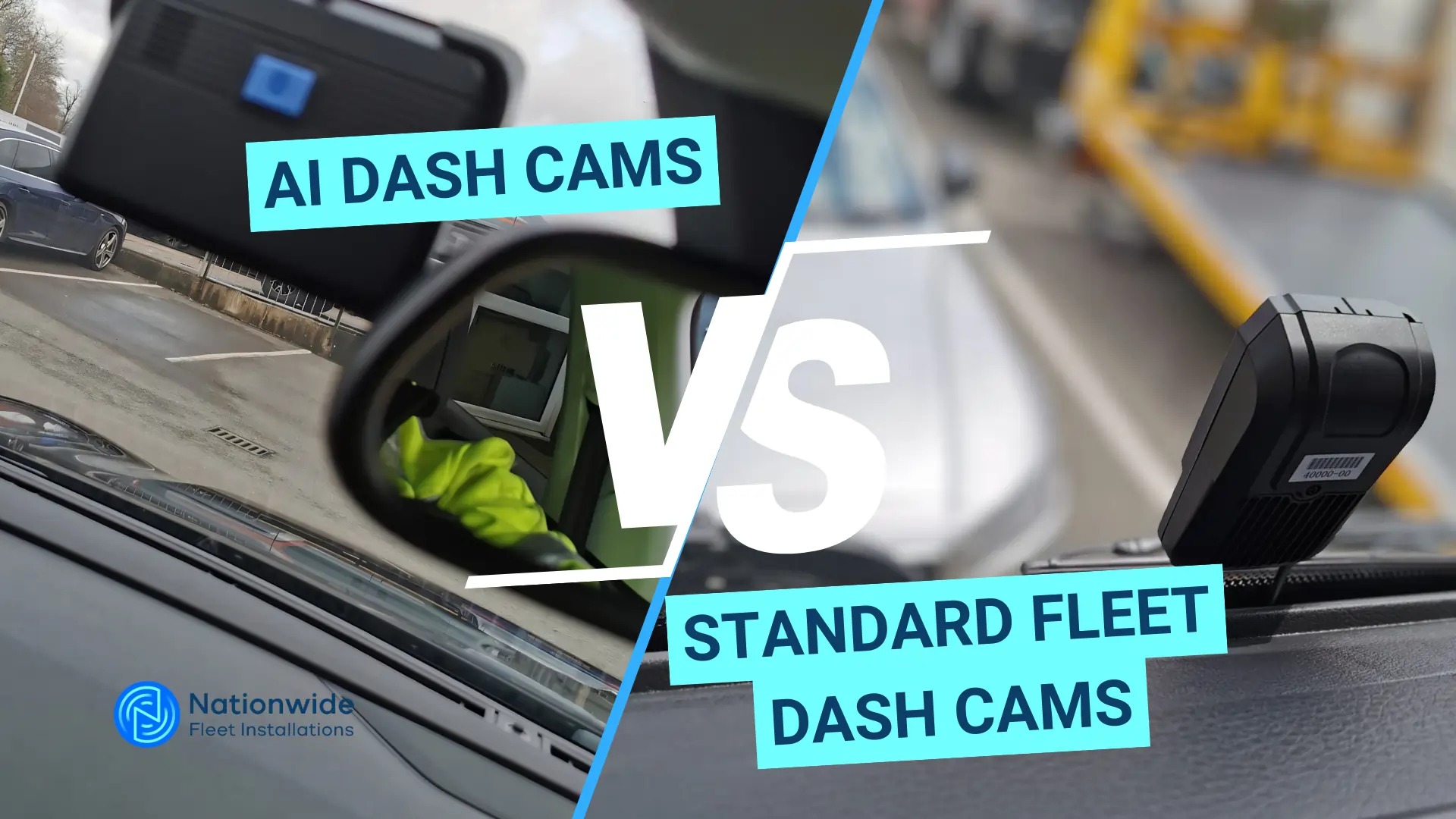
As the leading telematics installers in the UK, we’ve had the privilege of fitting all kinds of fleet dash cams and video telematics technology over the past 30 years. More recently, by working closely with our equipment partners, we’ve been involved in AI dashcam trial installations and testing before going on to fit the technology into thousands of commercial vehicles across the country.
The aim of this post is to give you a clear overview of what’s out there so you can make a more informed decision when choosing your next video telematics solution (that’s the industry term for camera and recording systems that connect to your fleet management platform).
This article is not here to knock standard fleet dash cams. They’ve been a big feature in commercial vehicle fleets for a long time, and they still do a solid job. AI dashcam technology has advanced significantly, offering more benefits to fleet operators, and we want to show you some of the things it can do and how that benefits your operations. We also want to reassure our equipment partners that AI dash cams can be installed into commercial vehicles just as easily as standard ones.
Overview Comparison
|
AI Dash Cams |
Standard Fleet Dash Cams |
|
|---|---|---|
|
Use case |
Prevent accidents and useful in post-accident review |
Useful tool in post-accident review |
|
Driver usefulness |
AI alerts, voice prompts and in-cab warnings |
Typically a light to show the driver it’s on and recording |
|
Effort |
Automated event creation and tagging |
Manual review of footage |
|
Maintenance |
Alerts the fleet operator if something isn’t working or is broken |
Regular manual checks needed to make sure it’s working |
|
Data access |
Built-in AI processing and remote access to features |
Remote download and manual hard drive retrieval |
|
Privacy |
Same as standard dash cams but with added controls such as driver face blurring and GDPR settings |
Encryption, access keys, locked hard drives and SD cards, hardwired into the vehicle |
What is an AI Dash cam?
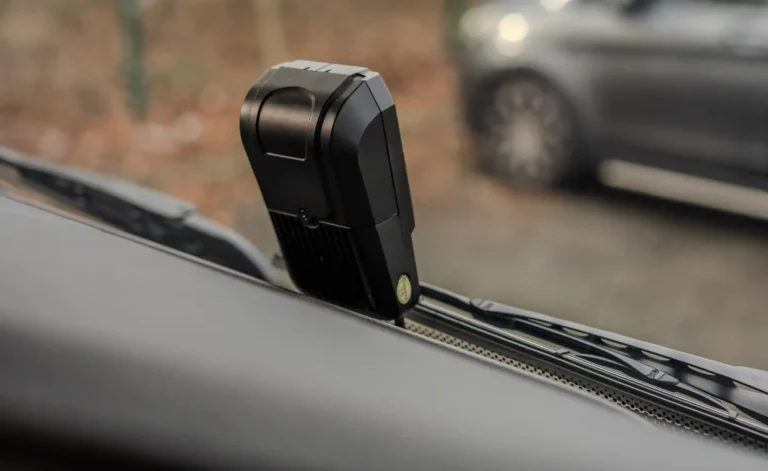
An AI dash cam is a dash camera with AI technology integrated into it. There can be a few variations depending on the vendor, as we have found that some units we fit have an AI processor integrated directly into the dash cam, whereas other units use a standard dash cam, but the DVR or backend system has an AI processor which interprets the footage.
Fleet Dash Cams
Business and fleet dash camera systems for commercial vehicles in the UK. Helping operators and providers. Get your…
See how we install itIn the industry, AI-enabled dash cams are seen as more proactive compared to regular fleet dash cam solutions. Traditional dashboard cameras just record footage for later review, but AI dash cams actively monitor in real-time and often include features such as driver alerts for hazards like forward collision risk, lane departure, harsh braking, driver distraction, and drowsiness.
They are almost always cloud-connected, which allows fleet managers to access footage remotely and receive real-time alerts. The systems typically get better over time as AI algorithms improve through cloud-based updates and machine learning refinement.
We fit AI-enabled dash cams into commercial vehicles, with many systems offering dual-camera configurations (forward-facing and driver-facing cameras).
Saving Time on Footage Review
With some older dash cams, videos are recorded with no event stamping. That means someone has to trawl through hours of footage to find what they need. With AI systems, events are detected automatically and stored as tagged events, so you don’t have to sit through the whole recording. For a busy fleet manager dealing with many other priorities, that’s a big time saving.
Solve issues quicker
A second benefit is speed, and this is where it really helps with something called eFNOL. FNOL stands for First Notification of Loss, which is the process of reporting an incident to your insurer. The “e” just means it’s done electronically. AI dash cams have the processing technology built into the actual device and are cloud connected with very quick refresh rates.
What this means in practice is that footage of incidents is available in the cloud almost immediately. This is incredibly useful for proving a driver was not at fault, which reduces the time spent on the claims process and could mean significant savings when it comes to insurance.
Driver Scores Without the Overhead
The problem with standard dash cams in the past was that they were one-dimensional. They could really only be used for footage review and coaching. So when fleet operators wanted to score their drivers and rank them on driving behaviour, they had two options: invest in a separate telematics technology like GPS tracking or gamification platforms to do that, or go through hours of footage for every single driver to see how they were performing.
That approach has a few obvious problems. It uses a lot of resource, taking time away from the fleet manager who should be doing other things. Over the course of a month, the hours really add up, and on top of all that, drivers often feel like they are being constantly spied on since video is being reviewed when it doesn’t need to.
With AI dash cams, because the technology is already detecting events and categorising and tagging them, some systems can turn this data into a driver league table or safety score automatically. That makes the creation of competitions, safety programmes and reward schemes easy to set up and manage, without the overhead of someone manually pulling all that information together.
Real-Time Alerts That Actually Help the Driver
AI-enabled systems don’t just benefit the fleet manager. They bring real benefits for the driver too, especially when it comes to the number of features available.
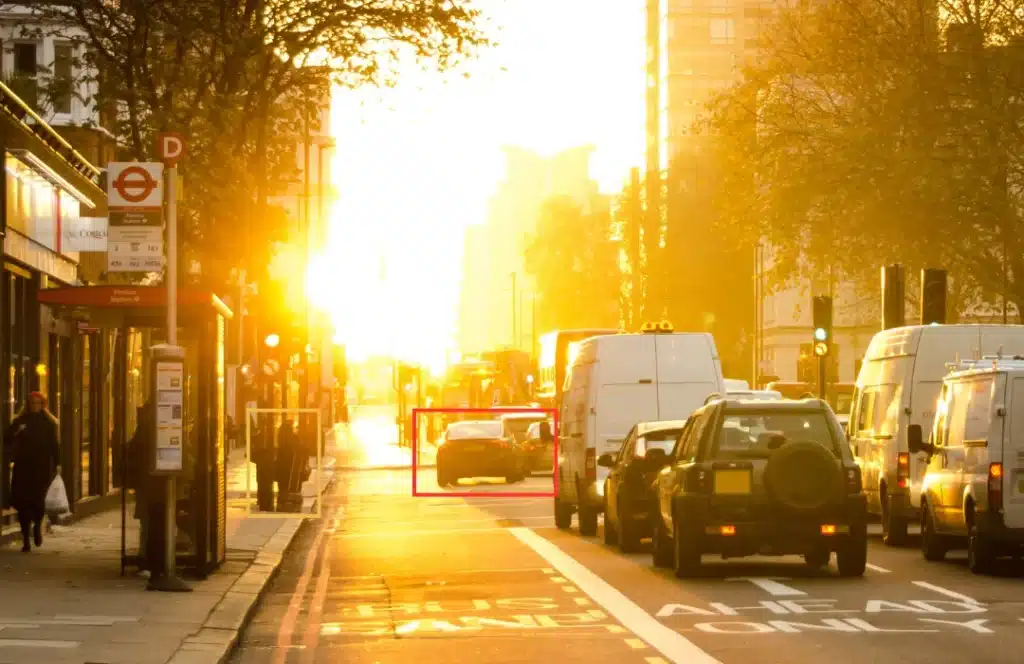
One of the key differences is real-time AI alerting. Instead of the camera just sitting there recording, AI technology allows it to actively alert the driver during day-to-day driving. In busy city centres, for example, where vulnerable road users like cyclists and pedestrians are around alongside stationary road furniture (things like bus stops, bollards and signage), the AI can distinguish between a genuine risk and something that doesn’t need a warning. That kind of intelligent alerting helps the driver stay focused on what actually matters.
Smarter Driver Behaviour monitoring
AI technology also introduces more advanced driver behaviour monitoring. It can automatically detect negative driving behaviours such as mobile phone use behind the wheel, signs of drowsiness, and other forms of distracted driving. The system can then coach the driver in real time, which actually reduces the risk of accidents before they even happen. That’s a big deal when it comes to lowering incident rates and cutting costs across the fleet.
With some systems, fleet managers can then categorise events on a scale and decide which need human intervention and which ones can just be delt with as a report.
From Recorder to Co-Pilot
On the surface, both standard fleet dash cams and AI dash cams provide fleet managers with footage. But where AI-enabled cameras take the lead is in what they do with that footage.
A standard dash cam is essentially a recorder, It tells you what happened after the incident. The introduction of AI has changed that, AI enabled cameras now act more like co-pilots for the driver, shifting from being a post-accident tool to something that is proactively helping to prevent accidents in the first place.

Thinking about upgrading to ai enabled dash cameras? We Can Help
If you’re also thinking about upgrading your existing camera systems from traditional ones to AI-enabled systems but you’re not sure about the removal and installation process, or how to do it without disrupting your operations, you can get in touch or book a free consultation so that we can support you through the whole process.
If you have already invested in a new AI camera system and are interested in professional installation, get in touch with us. With over 30 years of installation experience and hands-on involvement in AI video telematics trials, we have the skills and knowledge to mount your camera systems onto your vehicles.

Written by
James Pearson
James Pearson is the Field Operations Manager at Nationwide Fleet Installations, a trusted vehicle technology installation provider headquartered in the North West and operating across the UK. With a career that began as an auto electrical engineer, James brings over 15 years of hands-on experience to the role, specialising in the installation of cameras, sensors, trackers, and IoT solutions for fleets. He helps fleet operators and vehicle technology providers ensure their technology is professionally installed to the highest standards. Having progressed in the industry through roles such as field technician, to Area Manager and Quality Assurance Manager, James is known for his leadership skills and commitment to developing talent. His colleagues often praise his ability to mentor and coach, helping team members learn and grow on the job.
Fleet Dash Cams
Business and fleet dash camera systems for commercial vehicles in the UK. Helping operators and providers. Get your…
See how we install itGet In Touch
We provide fleet operators and equipment providers alike with a nationwide installation service for telematics equipment, safety systems, and more. Call us on 0161 786 6600 or email the team at info@nationwidefleetinstallations.com to see what we can do for you.