What vehicles need the Direct Vision Standard and HGV Safety Permit?
Breaking down exactly which vehicles need a Direct Vision Standard (DVS) Safety Permit, explaining how star ratings work, when a Progressive Safe System (PSS) is required, and which vehicles are exempt.
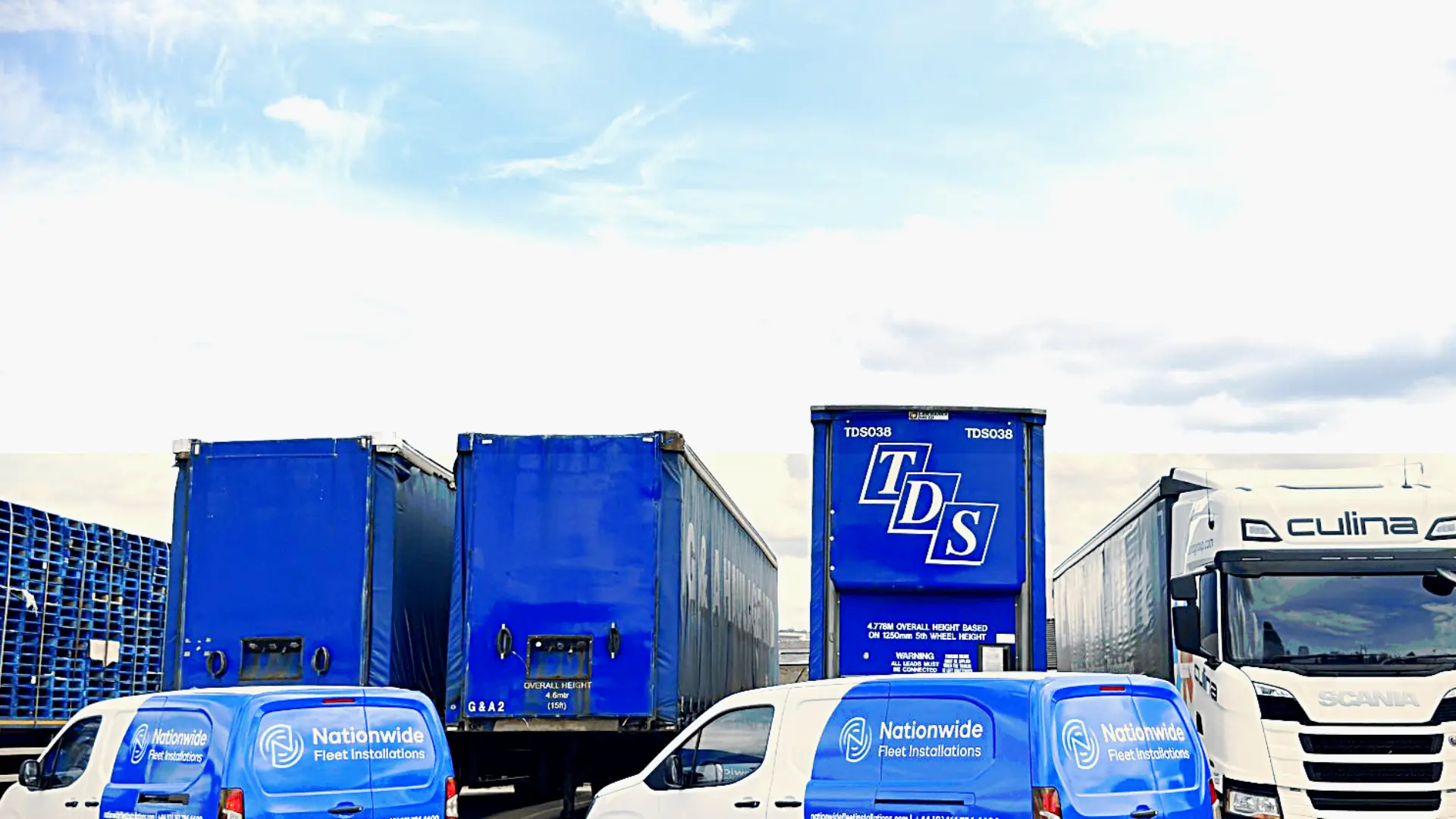
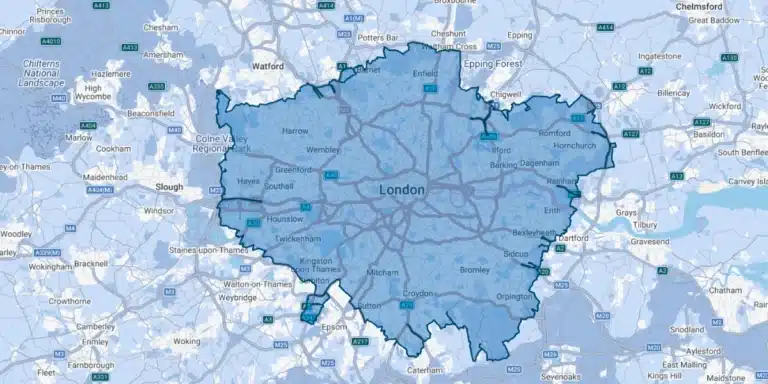
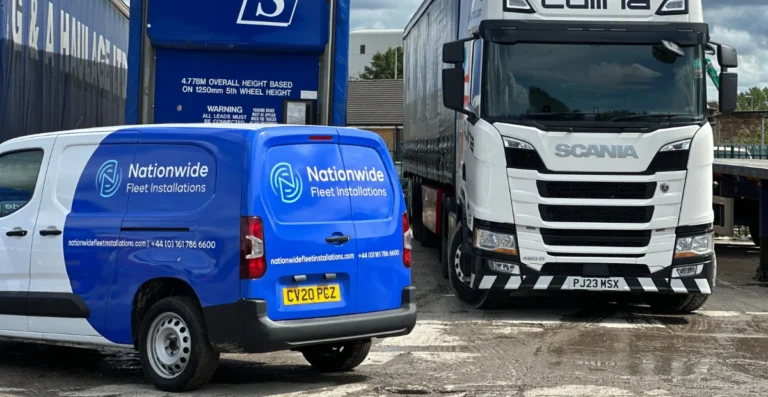
All heavy goods vehicles over 12 tonnes gross vehicle weight (GVW) entering or operating in Greater London (all 32 London boroughs and the City of London) must hold a valid HGV Safety Permit under Transport for London’s Direct Vision Standard (DVS), unless they fall into a specific exempt vehicle category.
Vehicles below 12 tonnes GVW are outside the scope of the scheme and do not need a DVS permit.
Now this plays out differently depending on your vehicles:
Vehicles rated 3–5 stars
If your vehicles have a DVS star rating of three, four or five stars, you can apply for an HGV Safety Permit without any additional steps needed.
Vehicles rated 0–2 stars, or unrated
If any of your HGVs have a star rating of zero, one or two stars or the vehicle has not been rated, they must be fitted with a Progressive Safe System to obtain a permit.
Direct Vision Standard
Get your fleet Direct Vision Standard compliant with installation and Progressive Safe System fitting. Fast UK-wide…
See how we install itCheck your HGV DVS star rating and safety permit status | How the star rating is measured
Left‑hand drive vehicles (LHD)
Left-hand drive (LHD) HGVs, often used by European hauliers can legally operate in the UK, but they still need to comply with the DVS and HGV Safety Permit Scheme if they are over 12 tonnes GVW and operating in most of Greater London.
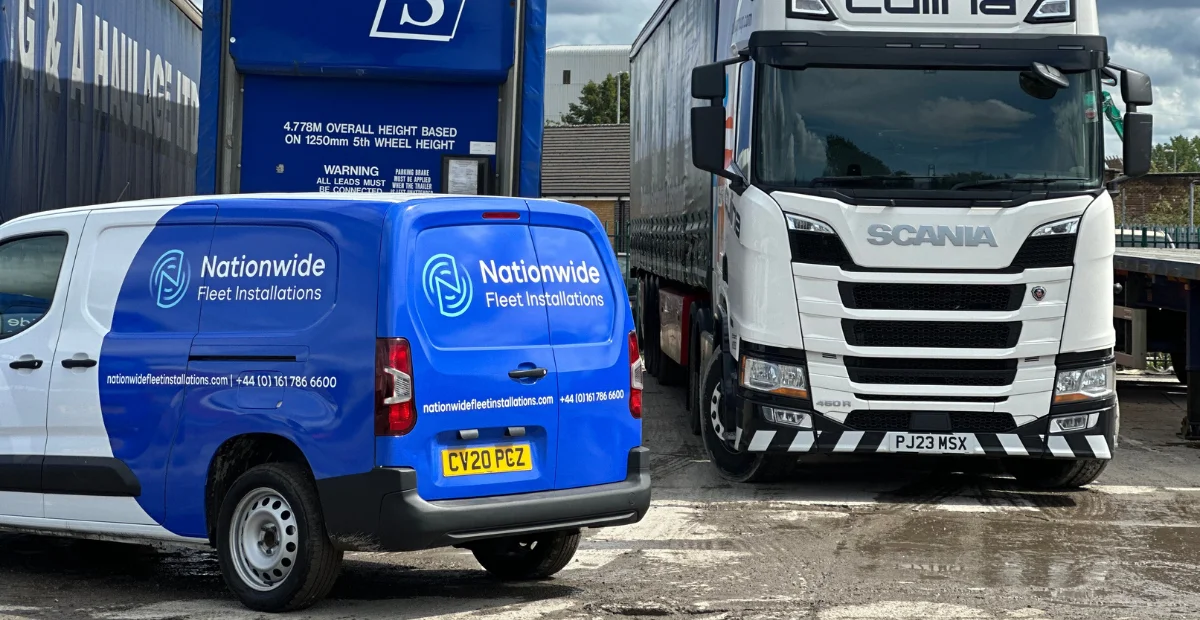
This again is where it’s important to working with a professional telematics and safety systems installer like Nationwide, to make sure your LHD vehicles meet the standard in practice, not just on paper. For example, warning systems and sensors may need to focus on right‑hand turns rather than left, and on the UK nearside.
Contact us if you need a specialist installer for left-hand drive vehicles.
Which vehicles are exempt from the Direct Vision Standard?
Some vehicles are fully or partially exempt from the HGV Safety Permit Scheme. These are specific categories only and include, for example:
Because exemptions are tightly defined and can change, operators should always refer to the latest TfL guidance to confirm whether a particular vehicle is fully exempt, partially exempt from PSS measures, or fully in scope.
Table 1: Vehicle categories fully exempt from the HGV Safety Permit Scheme (March 2025)
(From TfL DVS Guidance)
|
Vehicle type |
Scheme exemption |
|---|---|
|
Emergency service vehicles, including ambulances and fire engines which have a taxation class of ‘ambulance’ or ‘fire engine’ on the date of travel |
Exempt for specified vehicles – It is not considered appropriate to require emergency service vehicles to meet the DVS star rating threshold or to comply with the Progressive Safe System conditions as these vehicles need to be suitable for the operations for which they are designed |
|
Council-operated gritting and snow plough vehicles |
Fully exempt – These are specialist, very low-mileage vehicles that are only utilised in certain weather conditions |
|
Armed Forces vehicles |
Fully exempt – It is not considered appropriate to require Armed Forces trucks to meet the DVS star rating threshold or to comply with the Progressive Safe System conditions as they need to be suitable for the operations for which they are designed |
|
Ministry of Defence vehicles / military vehicles |
Fully exempt for specified vehicles – It is not considered appropriate to require military trucks to meet the DVS star rating threshold or to comply with the Progressive Safe System conditions as these vehicles need to be suitable for the operations for which they are designed |
|
Breakdown organisations / recovery vehicles |
Fully exempt for specified vehicles – Exempt for vehicles called out by the emergency services whose load is required for the purposes of dealing with any actual or perceived emergency affecting the safety of persons or property |
|
Historic vehicles |
Fully exempt – All vehicles that have a ‘historic’ vehicle tax class will be exempt from the DVS. This tax class excludes any vehicle used commercially. It would be inappropriate to require historic vehicles to comply with the Progressive Safe System permit conditions |
|
Showman’s vehicle |
Fully exempt – Showman’s vehicles are eligible for an exemption from DVS but must register the vehicle with TfL. The registration must be made by a person following the business of a travelling showman and the vehicle must have been modified or specially constructed for this purpose. It would be inappropriate to require showman’s vehicles to comply with the Progressive Safe System permit conditions |
|
A vehicle to which no bodywork has been fitted and which is being driven or towed |
Fully exempt – (A) For a quality or safety check by its manufacturer, dealer or distributor; (B) To a place where bodywork is to be fitted or preparatory work carried out; (C) By previous arrangement to premises of a dealer or distributor |
|
Mobile cranes |
Fully exempt – These are specialist, low-mileage vehicles requiring special permission to operate in London |
|
A vehicle being driven/towed to a place where, by previous arrangement, Progressive Safe System equipment is to be fitted |
Fully exempt |
Table 2: HGVs partially exempt from specified PSS requirements (March 2025)
|
Vehicle type |
Scheme exemption |
|
Exemptions from PSS requirement for lateral under-run protection |
|
|
Road sweepers |
Exempt |
|
Gully emptiers / suckers |
Exempt |
|
Breakdown organisations / recovery vehicles (where not fully exempt) – see condition |
Exempt where applicable – Only exempt where the sides of the vehicle are so designed and/or equipped that their shape and characteristics meet the requirements for fitting side under-run protection or other sideguards |
|
Tractors for articulated vehicles |
Exempt – All trailers used with the exempt tractor unit will be required to fit side under-run protection (unless covered by an additional exemption) |
|
Vehicles mounted with cranes and/or access working platforms |
Exempt where applicable – (A) From the forward point of the vehicle stabiliser legs; (B) Otherwise where it is not fully practicable to comply with requirements for fitting side under-run protection |
|
Vehicles fitted with items where a sideguard would otherwise be required (e.g. fuel tanks, equipment boxes) |
Exempt where applicable – Where the shape and characteristics of such items provide protection equivalent to a sideguard and gaps between components do not exceed 300 mm |
|
Tank-vehicles (vehicle designed solely for carriage of fluids in a permanently fitted tank with hose/pipe connections) |
Exempt – Where fitting side under-run protection would prevent the operation of hose or pipe connections |
|
Vehicle transporters (designed to carry other vehicles loaded from front or rear) |
Exempt where applicable – If the chassis rails are located on the extremities of the vehicle |
|
Vehicles equipped with anchorage points for roll-on/roll-off transport |
Exempt where applicable – Where gaps are required to allow passage and tensioning of fixings or lashings |
|
Exemption from PSS requirement for Class V and VI mirrors |
|
|
Bonneted vehicles such as Unimog |
Exempt – From Class VI mirrors only |
|
Vehicles fitted with direct view and/or indirect vision devices as an alternative to Class V or VI mirrors |
Exempt where applicable – As permitted by UNECE Regulation 46 |
|
Exemption from PSS requirement for warning signage |
|
|
Tractors for articulated vehicles |
Exempt – All trailers used with the tractor unit must fit warning signage |
|
Exemption from PSS requirement for camera monitoring system |
|
|
Vehicles with BSIS and MOIS installed at manufacture under UNECE Regulations 151 and 159 |
Exempt where applicable – Where systems are factory-installed as part of type approval |
|
Exemption from PSS requirement for BSIS and/or MOIS |
|
|
Specialist vehicles used for transporting abnormal indivisible loads |
Exempt – Where permanent vehicle characteristics prevent BSIS/MOIS from operating effectively |
Last updated: March 2026
What is PSS?
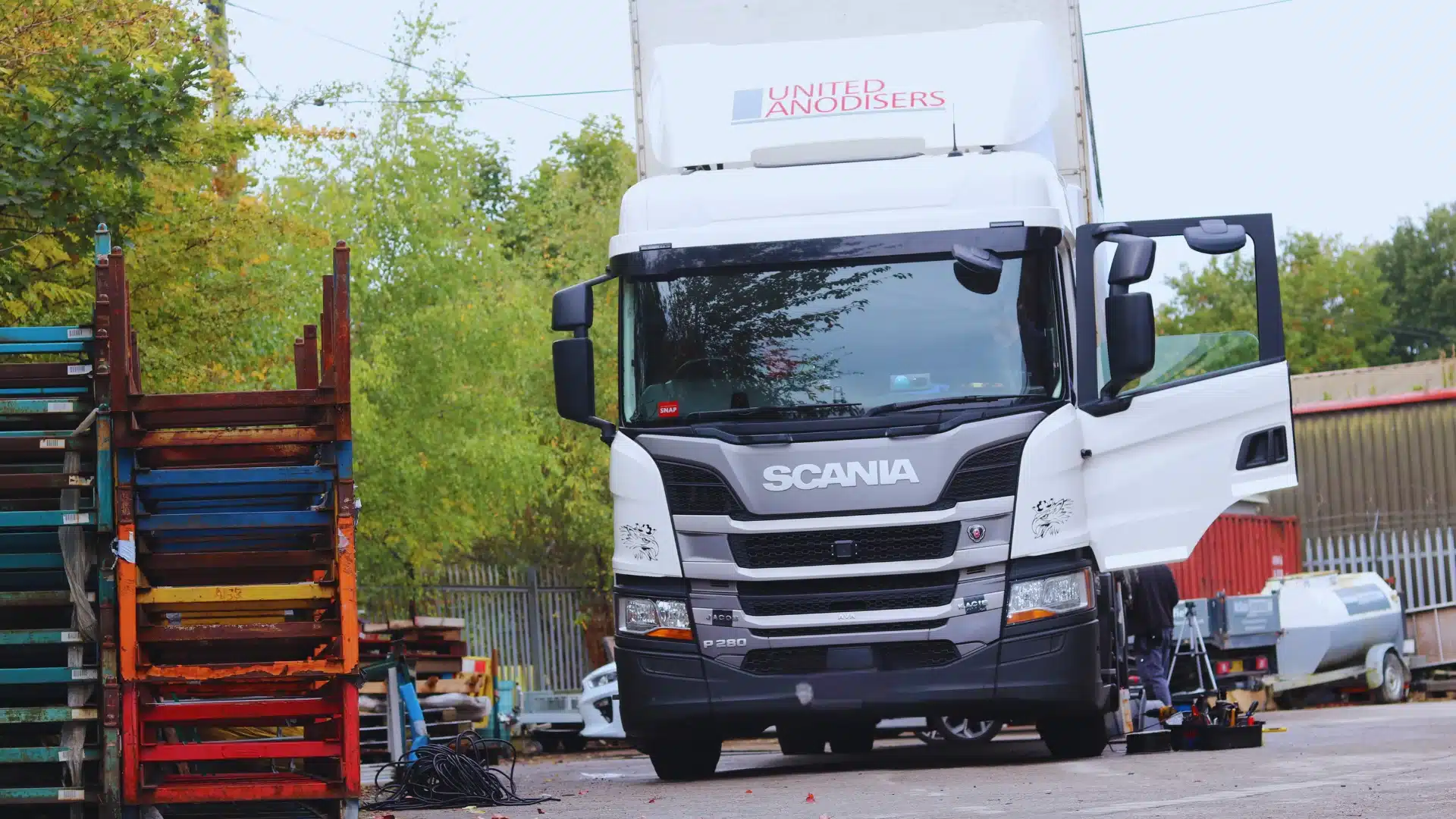
The Progressive Safe System includes a defined set of measures, such as nearside blind spot information systems, moving‑off information systems at the front of the vehicle, camera monitoring on the nearside, and audible warnings for turning manoeuvres, all to better protect vulnerable road users.
Find out more about PSS here
How the Direct Vision Standard is measured
The Direct Vision Standard (DVS) measures how much a driver can see directly through the cab windows of an HGV and uses this to assess the risk to people around the vehicle, such as vulnerable road users like cyclists and pedestrians.
Every affected vehicle is given a star rating from zero (lowest) to five (highest), based on the cab’s design as assessed by the vehicle manufacturer. This rating is about the direct field of vision from the driver’s seat, and does not take cameras, mirrors or other aftermarket safety systems into account
How is DVS checked and enforced?
Transport for London (TfL) enforces DVS using automatic number‑plate recognition (ANPR) cameras and roadside checks to identify HGVs over 12 tonnes entering Greater London.
If a vehicle operates within the area without a valid HGV Safety Permit, or in breach of permit conditions, the operator can receive a Penalty Charge Notice for each day the vehicle is driven on a relevant road. Ensuring your vehicles are correctly rated, equipped and permitted before entering London is the simplest way to protect your drivers, other road users and your compliance record.
Contact us
If you need progressive safe systems installed for your fleet, please get in touch with our technical team today.

Written by
James Pearson
James Pearson is the Field Operations Manager at Nationwide Fleet Installations, a trusted vehicle technology installation provider headquartered in the North West and operating across the UK. With a career that began as an auto electrical engineer, James brings over 15 years of hands-on experience to the role, specialising in the installation of cameras, sensors, trackers, and IoT solutions for fleets. He helps fleet operators and vehicle technology providers ensure their technology is professionally installed to the highest standards. Having progressed in the industry through roles such as field technician, to Area Manager and Quality Assurance Manager, James is known for his leadership skills and commitment to developing talent. His colleagues often praise his ability to mentor and coach, helping team members learn and grow on the job.
Direct Vision Standard
Get your fleet Direct Vision Standard compliant with installation and Progressive Safe System fitting. Fast UK-wide…
See how we install it
Progressive Safe System
Learn what the Progressive Safe System means for the 2025 Direct Vision Standard (DVS) and fitting of progressive safe…
See how we install itGet In Touch
We provide fleet operators and equipment providers alike with a nationwide installation service for telematics equipment, safety systems, and more. Call us on 0161 786 6600 or email the team at info@nationwidefleetinstallations.com to see what we can do for you.