Half of All Fatal HGV-Cyclist Collisions Happen on a Left Turn. How Can Fleet Operators Reduce Risk?
Left turn collisions involving HGVs are among the most devastating incidents on UK roads, with cyclists and pedestrians bearing the worst consequences. Yet the contributing factors, restricted visibility, driver blind spots, and the sheer size of large commercial vehicles, are well understood and, crucially, addressable. This post explores why the danger persists, what the data tells us about the scale of the problem, and how properly installed blind spot camera systems are proving to be one of the most effective tools fleet operators have to protect vulnerable road users.
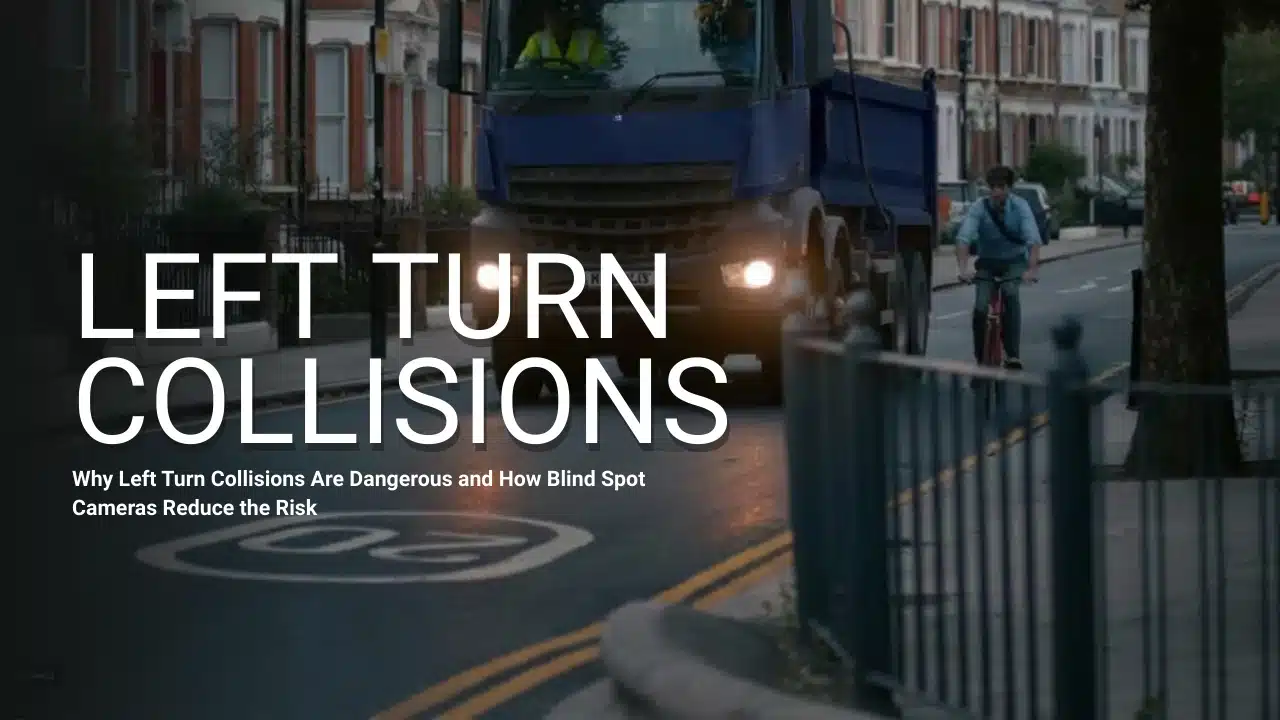
Left turn collisions are a dangerous occurrence on UK roads due to a wide range of contributing factors. Across the UK, an analysis of serious and fatal collisions between cyclists and heavy goods vehicles found that 52% of fatal collisions involved a lorry turning left across a cyclist’s path.
Why Left Turn Collisions Are Dangerous?
Left-turn collisions are dangerous for several reasons. This is why road safety organisations, fleet operators, and charities continue to raise awareness of this type of collision. In response, specific safety measures have been introduced to try to reduce the risk.
It is not just cyclists who are at risk. Other vulnerable road users, such as pedestrians and motorcyclists, are also affected by left-turn collisions. Let’s see the factors below:
Size of vehicles
The size of vehicles commonly involved in left turn collisions significantly increases the risk of serious injury or fatality. Heavy goods vehicles, coaches, and other large vehicles have greater mass, which means that any contact can have severe consequences.
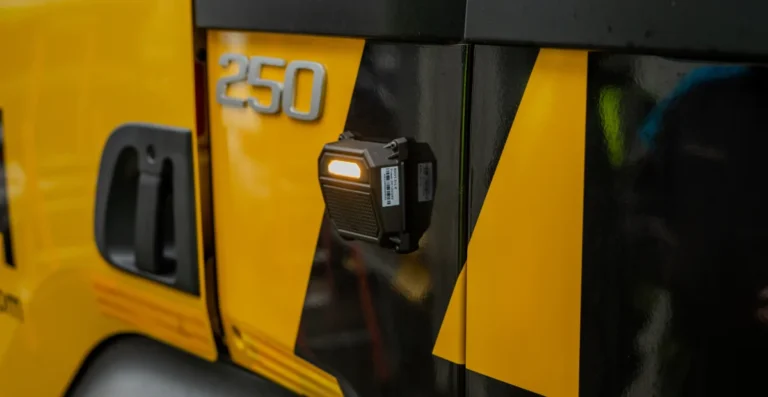
Left Turn Warning Systems
We install a wide range of left-turn warning alarms and systems for fleet operators and vehicle safety solution…
See how we install itVehicle size also affects cab design. Due to the height and structure of many large vehicle cabs, drivers may be unable to see the near side of the vehicle clearly, particularly if a cyclist or pedestrian is positioned close to the vehicle.
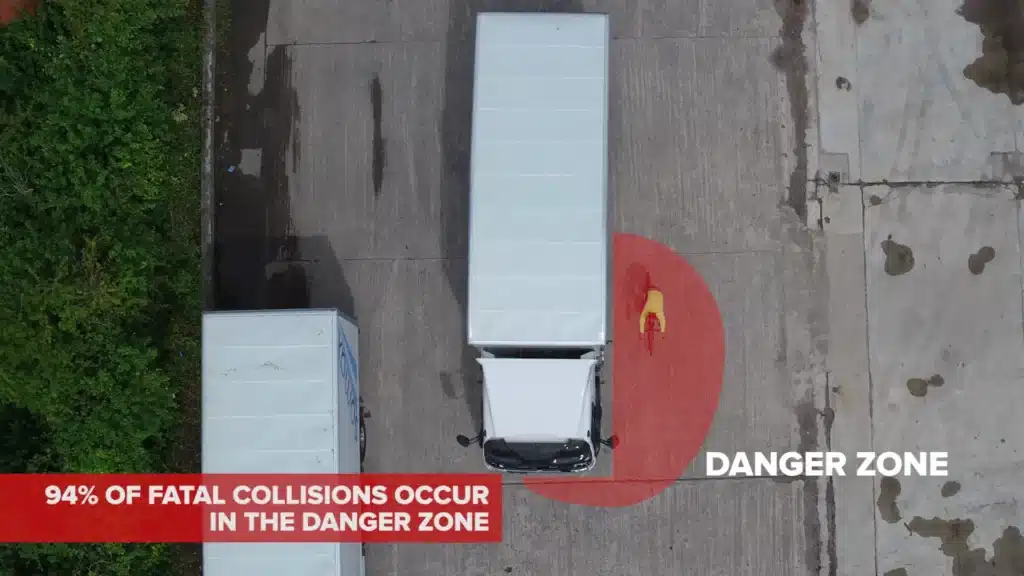
In addition, larger vehicles have a wider turning radius. Vehicles with trailers may swing out slightly when turning left, creating a gap that vulnerable road users can move into. When the vehicle then turns across their path, cyclists or pedestrians can become trapped underneath the vehicle. Even at low speeds, this can result in serious injury or death.
Environment
In urban environments, large vehicles frequently operate in close proximity to smaller road users and vulnerable road users such as cyclists and motorcyclists. Busy traffic conditions increase the likelihood of left turn collisions.
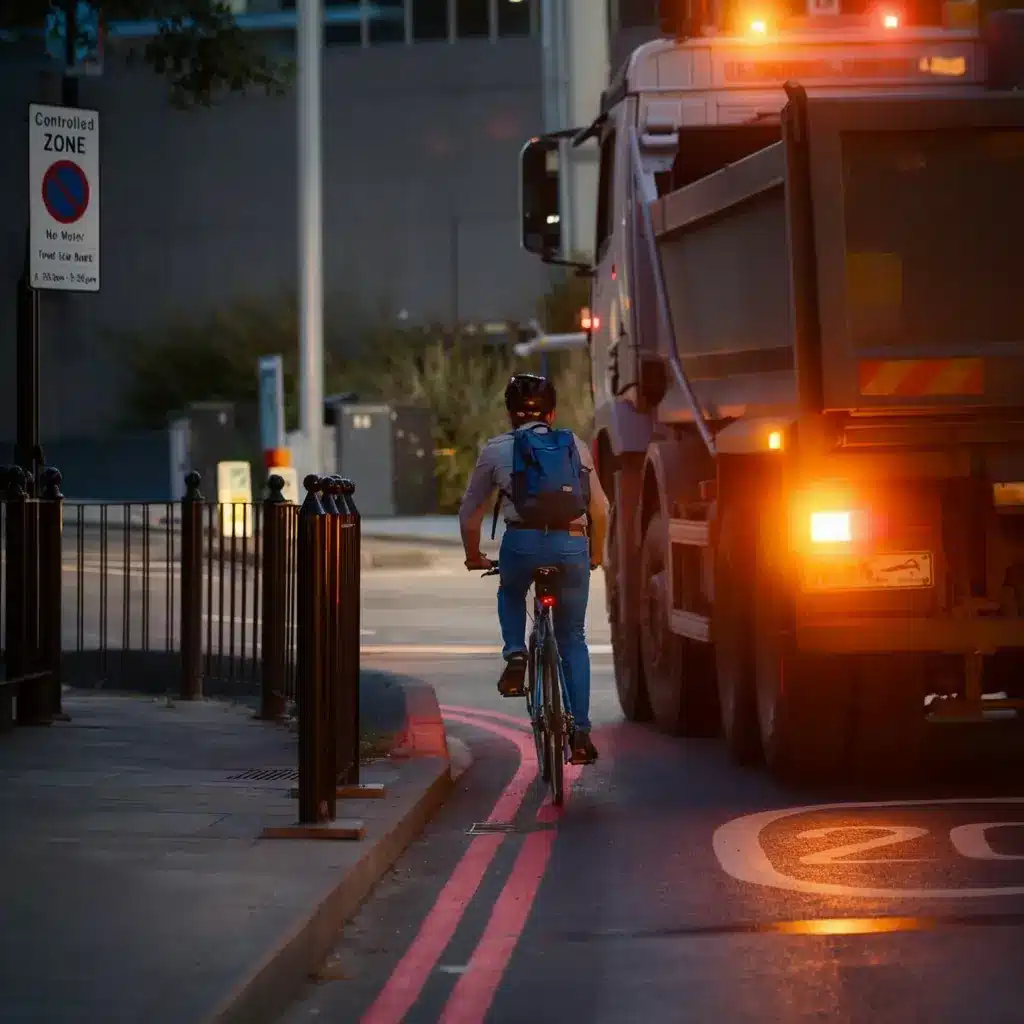
Collision data shows that in inner London and other major cities, HGVs make up a relatively small proportion of traffic but are involved in a disproportionately high share of cyclist fatalities. Industry research indicates that many of these fatal collisions occur during left turns.
Junctions
Data also shows that most collisions between HGVs and cyclists happen at or near junctions. This is largely due to the number of junctions in busy town and city centres and the complexity of road layouts.
Collisions often occur when a lorry is turning left while a cyclist is travelling straight ahead, or when both road users intend to turn left at the same time. Misjudgements in these situations can lead to serious incidents.
Other vehicles, including cars and motorcycles, can also remain in the blind spots of large vehicles such as HGVs and coaches. This makes it difficult for drivers to see them when changing lanes or turning, which can result in collisions. Significant efforts have been made to raise awareness of this issue, including the National Highways HGV blind spot campaign, which aims to educate road users about HGV driver blind spots.
From this we can see that, Any one of these factors above, or several together, can and do result in fatalities.
How to reduce the risk of left turn collisions
Alongside the work carried out by road safety organisations and charities, fleet technology and telematics are already playing an important role in reducing left turn collisions.
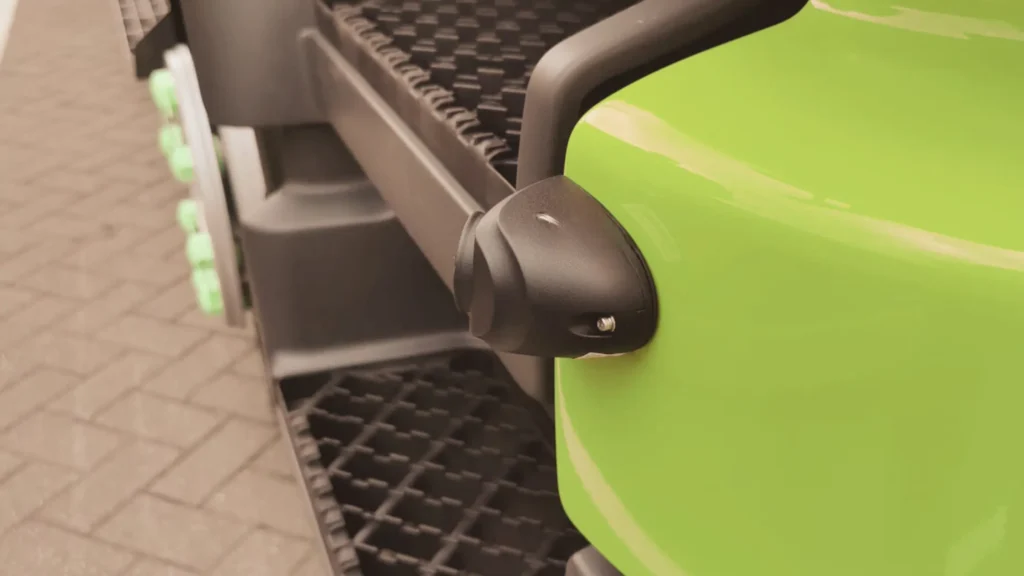
Blind spot cameras, also known as side view cameras, help drivers by reducing blind spots on large vehicles. Manufacturers recognise the increased responsibility placed on heavy goods vehicle drivers and have developed this technology to assist them when driving in complex environments.
Blind spot cameras
Traditionally, drivers rely on mirrors, sometimes referred to as direct vision. However, mirrors can still leave limited visibility on the near side of the vehicle. This means drivers can miss vulnerable road users or objects close to the vehicle.
Blind spot or side view cameras provide additional visibility, allowing drivers to see areas that would otherwise be hidden.
Supporting manoeuvres
Most left turn collisions occur while vehicles are manoeuvring. Side view cameras provide a clearer, more detailed view during high-risk movements such as lane changes, turning left, pulling away from junctions, and moving off from stationary positions.
These systems are not intended to replace mirrors but to support them. By combining mirror views with camera monitor systems, drivers gain greater confidence, reduced stress, and improved awareness during critical manoeuvres.
Audible warning alarms and sensors.
Another type of fleet technology that helps reduce the risk of accidents is audible warning alarms and sensors. These systems play a different, but equally important, role in reducing the risk of left-turn collisions.
Unlike cameras, which provide visual information to the driver alone, alarms and sensors operate across multiple dimensions. They not only alert the driver in the cab of potential hazards, but also warn other road users of a vehicle’s presence and movement.
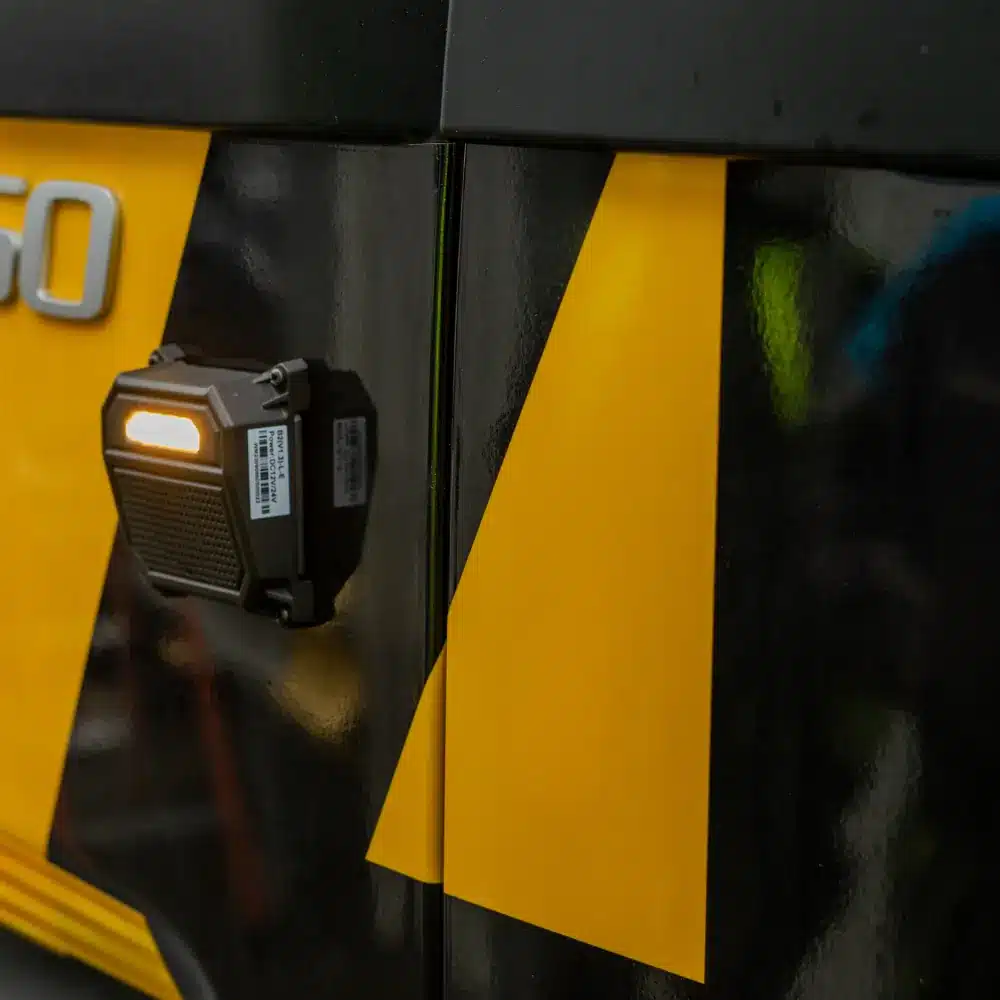
Vehicle warning systems rely on technology such as radar, ultrasonic, or AI-enabled sensors to detect cyclists, pedestrians, or other vulnerable road users in the near-side blind spot.
For other road users
Some alarms and sensors emit sound and use flashing lights at the same time, providing both an audible and visual warning. This helps vulnerable road users recognise when a vehicle is cornering, reversing or moving off and alerts them to stay clear of danger zones.
For the driver
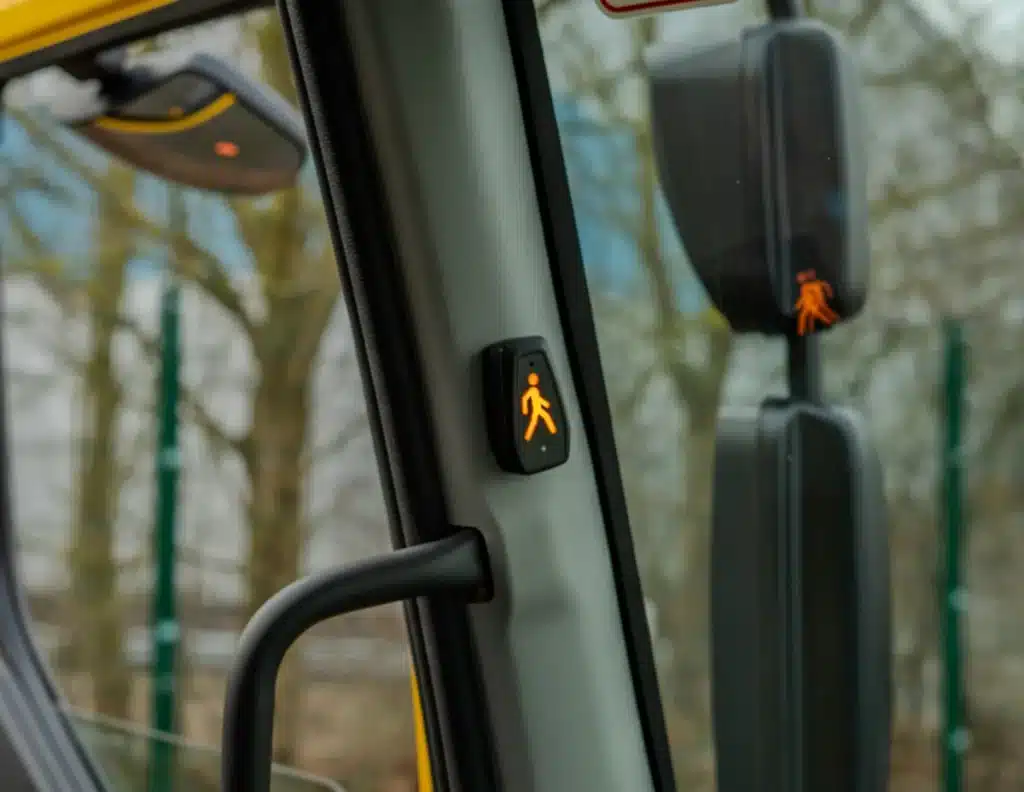
When a potential risk is detected, the system triggers an audible and/or visual warning notification inside the cab, drawing the driver’s attention to the hazard and prompting them to reassess before continuing the manoeuvre.
Stickers
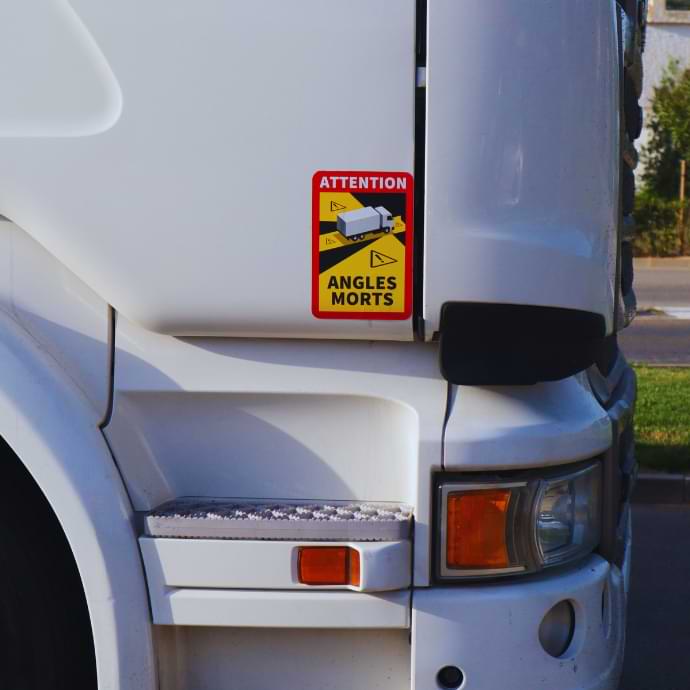
While stickers are not a form of technology, they remain an important part of fleet safety and provide another layer of risk reduction. Blind spot warning stickers alert other road users to areas where visibility is limited and indicate where it may be unsafe to overtake.
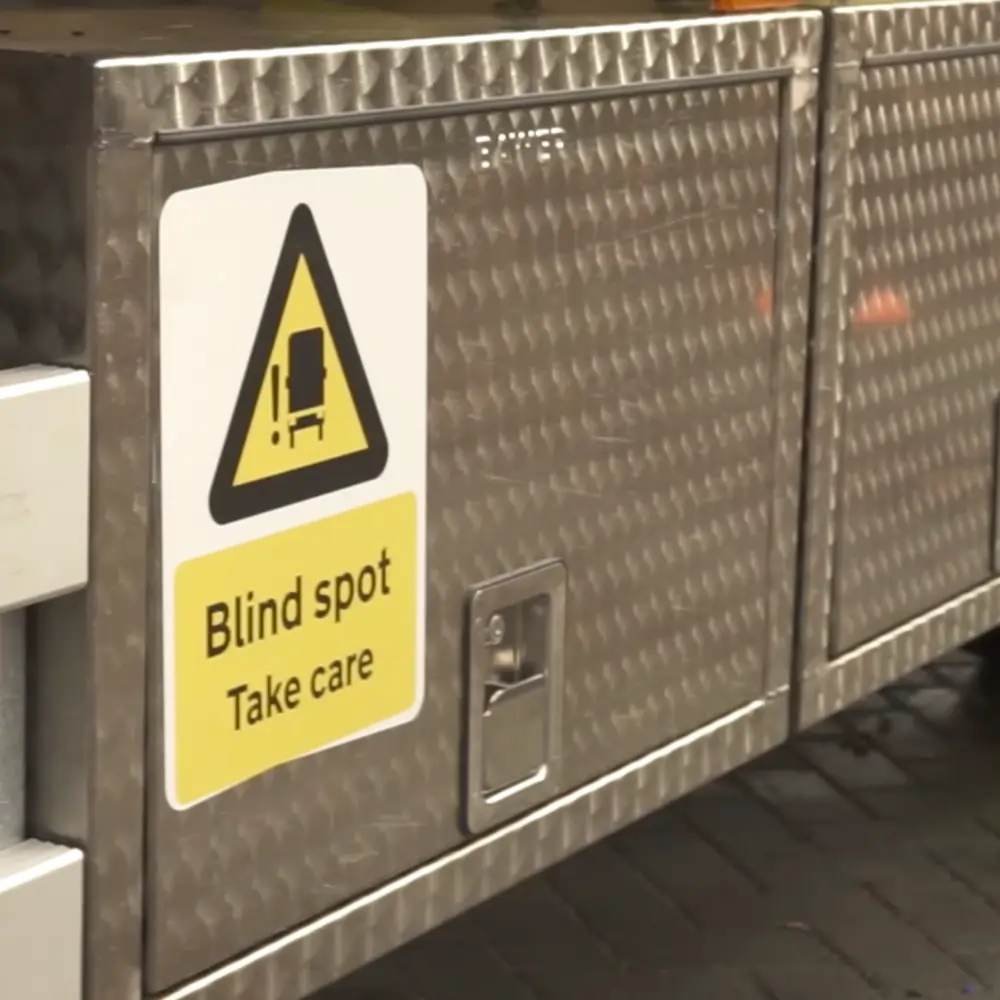
Blind spot stickers are a requirement under the Direct Vision Standard, and they are also required by French law (Angles Morts) for all vehicles over 3.5 tonnes, regardless of the country of registration, when operating in France.
A few things to note:
Not a replacement for driver judgment
Importantly, these systems are not intended to replace driver judgement. Instead, they act as an additional safety layer, supporting drivers with timely alerts when visibility alone may not be sufficient. This should be stressed as part of your fleet safety program.
Night cut off
Secondly, It should be noted that audible alarms, beepers, and other vehicle warning systems may need to be muted during night-time operations for environmental reasons, particularly to reduce noise pollution in residential and urban areas. Many HGVs are fitted with cut-off or night-mode features that allow these systems to be switched off or reduced in volume.
In the UK, this typically applies during night-time hours between 23:00 and 07:00, in line with local authority noise controls. Where audible warnings are muted, fleets should ensure that alternative safety measures, such as visual warnings, cameras, and driver awareness, remain in place to maintain safety.
More than compliance
Thirdly, fleet safety is not just about sticking stickers on the side of vehicles to tick a compliance box. These warnings exist to alert other road users to danger, demonstrate compliance with safety standards, and clearly show a company’s commitment to reducing road risk.
When applied properly, stickers act as a constant visual reminder of blind spots and vehicle movement, particularly for vulnerable road users operating close to large vehicles. They also reflect a fleet operator’s wider attitude to safety and professionalism.
Holistic view of fleet safety
Stickers should never be treated as a standalone measure. They are most effective when used as part of a wider fleet safety initiative, alongside:
- Fleet safety technology
- Driver training and awareness
- Regular vehicle testing and inspections
- Planned maintenance and defect reporting
- Preventative inspection regimes
Taken together, these measures help create a safer operating environment for drivers and road users alike, reducing risk rather than simply meeting minimum compliance requirements.
What work is being done
Regulations have been introduced to help reduce the occurrence of near-side collisions, particularly in large cities such as London where a high proportion of fatal accidents occur.
Direct Vision Standard
Transport for London introduced the Direct Vision Standard (DVS), which requires vehicles to meet minimum direct vision requirements or install a Progressive Safe System. This system targets the elimination or reduction of near-side blind spots and relies on technologies such as side view cameras, radar, and AI sensors.
Research carried out by Transport for London in 2023 showed a 62% reduction in the number of people killed in collisions involving trucks after the DVS was introduced.
FORS & CLOCS
Other safety standards, such as CLOCS and FORS, also include blind spot cameras as part of their compliance requirements. These standards aim to improve the safety of vehicles used for work, recognising that many drivers spend long hours on the road.
To minimise the near-side blind spot, cameras must be positioned to cover areas of greatest risk on the near side of the vehicle.
Insurance
The insurance sector is also taking steps to reduce the risk of accidents. Many insurers recognise that fleet technology can reduce both the likelihood and severity of incidents.
Fleet operators that invest in professionally installed camera systems, including near-side blind spot cameras and fleet dash cams, may benefit from improved access to lower premiums or better terms at renewal.
This highlights the importance of collaboration across the industry in improving road safety. Fleet technology supports drivers not only in productivity but also in safety and confidence.
Conclusion
HGVs continue to present one of the greatest risks to cyclists on UK roads. In the last five years alone, 104 cyclists have been killed in collisions involving an HGV — almost one in five of all cycling fatalities. Those numbers are stark, and they underline why left-turn collisions remain such a critical safety issue.
Driver awareness, experience and judgement of the road, play a vital role in reducing the risk of these types of collisions. Technologies such as blind spot cameras, alarms, and sensors support drivers by offering clearer visibility, better information, and earlier warnings when they matter most.
Having vehicle camera technology professionally installed provides peace of mind that systems will function correctly when they are needed most, helping to reduce the risk of serious accidents and improve safety for all road users.

Written by
James Pearson
James Pearson is the Field Operations Manager at Nationwide Fleet Installations, a trusted vehicle technology installation provider headquartered in the North West and operating across the UK. With a career that began as an auto electrical engineer, James brings over 15 years of hands-on experience to the role, specialising in the installation of cameras, sensors, trackers, and IoT solutions for fleets. He helps fleet operators and vehicle technology providers ensure their technology is professionally installed to the highest standards. Having progressed in the industry through roles such as field technician, to Area Manager and Quality Assurance Manager, James is known for his leadership skills and commitment to developing talent. His colleagues often praise his ability to mentor and coach, helping team members learn and grow on the job.
Left Turn Warning Systems
We install a wide range of left-turn warning alarms and systems for fleet operators and vehicle safety solution…
See how we install it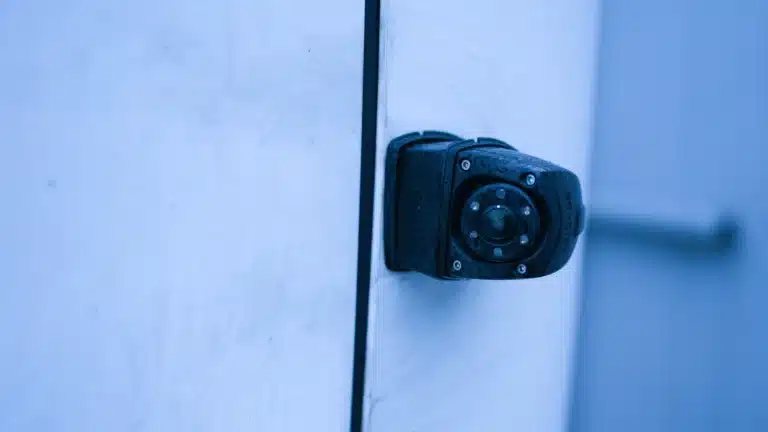
Blind Spot Cameras
Commercial vehicle blind spot camera installation. Contact us today to get your side view camera solutions…
See how we install itGet In Touch
We provide fleet operators and equipment providers alike with a nationwide installation service for telematics equipment, safety systems, and more. Call us on 0161 786 6600 or email the team at info@nationwidefleetinstallations.com to see what we can do for you.